Hidden fees in Mayfair rubbish quotes -- avoid surprises
Posted on 10/06/2026
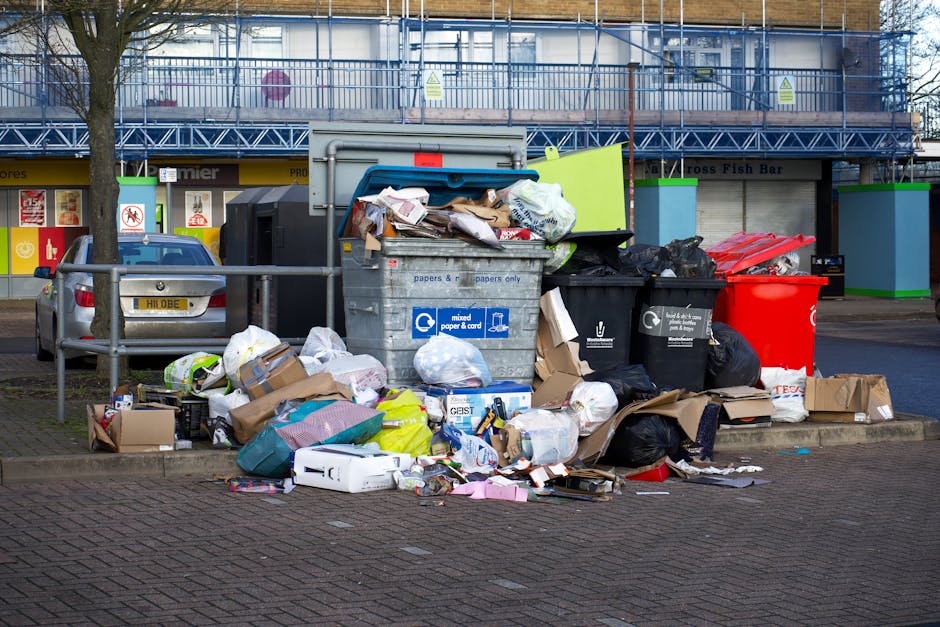
If you have ever requested a rubbish quote and then seen the final bill creep up, you will know how quickly a simple job can become annoying. In Mayfair, where access can be tight, parking is limited, and buildings often have extra logistics, hidden fees in Mayfair rubbish quotes -- avoid surprises is not just a nice idea; it is the difference between a smooth clearance and a very expensive headache. This guide breaks down how surprise charges happen, what to check before you book, and how to compare quotes properly so you can make a calm, informed decision.
We will keep this practical. No fluff, no sales patter. Just the sort of detail that helps you spot the small print before it bites. And yes, a lot of the trouble comes from things that seem minor at first: stairs, waiting time, bulky items, extra labour, or a quote that simply wasn't written clearly enough. That is where most surprises start.
- Why it matters
- How it works
- Key benefits and practical advantages
- Who this is for
- Step-by-step guidance
- Expert tips
- Common mistakes to avoid
- Tools, resources and recommendations
- Law, compliance and best practice
- Options and comparison table
- Case study or real-world example
- Practical checklist
- Conclusion
- Frequently asked questions
Why Hidden fees in Mayfair rubbish quotes -- avoid surprises Matters
Hidden fees are not only frustrating; they can distort every decision you make. A quote that looks affordable at first glance may become poor value once extras are added. In a place like Mayfair, where properties can involve narrow entrances, concierge arrangements, basement access, or controlled parking, those extras can appear more often than people expect.
The real problem is uncertainty. If the quote does not explain exactly what is included, you are left comparing apples with pears. One provider may include labour, loading, disposal, VAT, and access considerations. Another may quote a headline number and add charges later. That can make the cheaper quote the more expensive one, which is a bit of a nuisance, frankly.
It also matters because rubbish removal is usually booked under time pressure. A landlord wants a flat cleared before a handover. A shop on Bond Street needs stock room waste removed before opening hours. A homeowner just wants the garage back. When the clock is ticking, people are more likely to accept vague wording. That is exactly when surprise charges sneak in.
For readers comparing services, a transparent starting point such as the company's pricing and quotes information can help you understand what a fair estimate should include before you commit.
How Hidden fees in Mayfair rubbish quotes -- avoid surprises Works
In practice, hidden fees appear when a quote is built on assumptions that are not fully discussed. A provider may estimate the load size, access, or labour needed before seeing the waste in person. If the job turns out to be more difficult, the quote changes. Sometimes that change is justified. Sometimes it was predictable from the start but not properly explained. That difference matters.
Common examples include:
- Extra charges for carrying waste down multiple flights of stairs
- Parking or congestion-related costs
- Minimum load charges, even for small jobs
- Waiting-time fees if access is delayed
- Charges for items that need special handling, such as fridges or mattresses
- Additional disposal costs for mixed waste or heavier materials
- VAT added only at the final stage
To be fair, not every extra charge is hidden. If the service clearly says that difficult access or specialist items cost more, that is simply a fair pricing model. The issue is when the customer only discovers the charge after the work is already underway. By then, the leverage has shifted.
A useful way to think about rubbish quotes is this: the quote should describe the job, not just the vehicle. If all you get is a vague line like "rubbish removal from GBPX," you still do not know what will happen when the team arrives at a Georgian townhouse with awkward access and a lift that is, let us say, having a bad day.
Key Benefits and Practical Advantages
Learning how to spot hidden fees gives you more control, and control is the thing people usually want most when dealing with waste removal. You are not just trying to save money. You are trying to avoid stress, delays, and awkward conversations on the pavement with a van driver and a clipboard.
The main benefits are straightforward:
- Clear budgeting: You can plan the job properly and avoid last-minute cost creep.
- Better comparisons: You compare full-service pricing, not just headline numbers.
- Fewer disputes: A detailed quote reduces the chance of disagreement after collection.
- Faster bookings: A clear scope usually means quicker scheduling and fewer follow-up calls.
- Improved service fit: You can match the provider to the job type, whether domestic, office, or builders waste.
There is also a practical advantage that often gets overlooked: transparent quotes tend to indicate a more organised operator. A business that explains access issues, item types, and disposal methods clearly is usually better prepared on the day too. Not always, but often enough that it is worth noticing.
If you want to understand how a wider service range is framed, the page on services overview can help you see how different waste jobs are typically grouped and priced.
Who This Is For and When It Makes Sense
This guide is for anyone who wants rubbish removed in or around Mayfair without nasty surprises. That includes homeowners, tenants, landlords, estate managers, shop owners, office managers, property developers, and agents arranging clearances on someone else's behalf. In fact, the more complicated the property, the more useful this becomes.
It especially makes sense when:
- You are clearing bulky items from a flat or townhouse
- You need same-day or next-day removal and do not want price changes
- You are comparing several companies and the quotes look oddly different
- You are disposing of mixed waste, builders rubble, or appliance items
- You are arranging a house clearance, loft clearance, or office clearance
A small example: a homeowner in central London might assume a simple "van load" quote covers everything. Then the team arrives, discovers three long flights of stairs, and suddenly the price is different. That sort of thing is avoidable if the access is discussed early. The same applies to commercial sites where loading bays, time windows, or concierge sign-in procedures can slow everything down.
If you are dealing with a property in one of the busier parts of the area, related reading such as the Mayfair neighbourhood guide can also help you think through access and local logistics before you book.
Step-by-Step Guidance
Here is the simplest way to avoid hidden fees, without turning the whole thing into a spreadsheet exercise.
- Describe the waste clearly. List the item types, approximate quantity, and whether anything is heavy, fragile, or awkward.
- Explain access in plain English. Mention stairs, lifts, narrow hallways, loading restrictions, concierge requirements, or timed entry.
- Ask what is included. Labour, loading, transport, disposal, VAT, parking, and any minimum charge should be spelled out.
- Ask what triggers extra fees. Get the provider to name the exact situations that would change the price.
- Request a written quote. A written quote is far easier to compare than a quick phone estimate.
- Check the terms carefully. Look for wording around waiting time, difficult access, prohibited items, and cancellation.
- Confirm on the day if anything has changed. If the waste volume is larger than expected, ask for a revised price before work starts.
That is really the whole game. Good information in, fair quote out. If one detail is missing, ask again. Twice if needed. Nobody minds a careful customer, despite what some hurried booking pages might imply.
When the job is domestic and straightforward, a provider such as domestic waste collection in Mayfair can be a useful starting point for understanding how a simple collection should be scoped.
Expert Tips for Better Results
In our experience, the best protection against hidden fees is not negotiation in the dramatic sense. It is precision. The more precise your briefing, the less room there is for confusion later.
Here are the details people often miss:
- Photographs help. A few clear pictures of the waste and the access route can remove a lot of guesswork.
- Measure the awkward bits. Door widths, stair landings, and item dimensions matter more than people think.
- Be honest about mixed loads. A pile that includes timber, plasterboard, soil, and furniture is not the same as a single sofa.
- Ask about appliance handling. White goods sometimes need specific processing and may attract a separate fee.
- Confirm the tax position. VAT inclusion can change the headline number significantly.
- Check booking windows. If the crew is delayed because access is not ready, the quote may not stay fixed.
A slightly nerdy but useful habit: when you receive a quote, read it out loud once. If the wording makes sense when spoken, it is usually clearer. If it sounds like a half-finished promise, it probably is. Bit old-fashioned perhaps, but it works.
For larger or more sensitive jobs, resources on insurance and safety and waste carrier licence and compliance are worth checking, because a cheap quote is no bargain if the operator is not properly set up.

Common Mistakes to Avoid
Most surprise charges happen because the customer was rushed, vague, or too trusting. That is understandable, but avoidable.
- Accepting a quote without asking what is excluded. The exclusions matter as much as the inclusions.
- Assuming all rubbish is priced the same way. Builders waste, garden waste, furniture disposal, and office clearance all have different handling needs.
- Ignoring access details. A basement flat with stairs is not the same as ground-floor loading.
- Not checking whether the price is fixed or estimated. Those are not the same thing.
- Forgetting about special items. Fridges, mattresses, and heavy appliances often need extra handling.
- Choosing solely on the cheapest headline number. This one catches people out more than anything else.
There is also a subtle trap: some customers avoid giving full details because they fear the quote will rise. It may, but that is better than an unpleasant surprise on collection day. If the provider has clear pricing, the quote should reflect the real job, not an optimistic guess.
For example, if you are comparing furniture-related jobs, it helps to look at how furniture disposal in Mayfair or furniture removal in Mayfair is described, because item type and handling can affect the final price.
Tools, Resources and Recommendations
You do not need fancy software to avoid hidden fees. A notes app and a camera are usually enough. Still, a few simple tools make the process much easier.
- Phone photos or short videos: Helpful for showing load size, access, and awkward items.
- Basic measurements: A tape measure can save a surprising amount of back-and-forth.
- Written checklist: Use one list for waste items and another for access details.
- Quote comparison table: Keep each provider's inclusions and exclusions side by side.
- Terms and conditions: Read the sections on waiting time, cancellation, and additional labour.
It can also help to browse the company's published guidance before you request a price. Pages such as rubbish collection in Mayfair and waste disposal in Mayfair show the broad service framing, while payment and security helps you understand how a trustworthy operator handles transactions.
If sustainability matters to you, you may also want to ask how the waste is processed. A transparent provider should be able to explain recycling and disposal routes in simple terms, not hide behind vague phrases. The recycling and sustainability page is the sort of place where that expectation should be clearer.
Law, Compliance, Standards, or Best Practice
When rubbish removal is involved, compliance is not optional. In the UK, waste must be handled by operators who are properly authorised for the work they do, and customers should not be left guessing who is taking away their waste. You do not need to become a legal specialist, but you do need to check the basics.
Best practice usually includes:
- A clear written quote that states what is included and excluded
- Transparent identification of the waste carrier
- Responsible disposal or recycling arrangements
- Fair treatment of access-related charges explained before collection
- Clear terms for cancellations, delays, and extras
There is also a practical trust angle. If a provider is clear about compliance, safety, and payment handling, they are usually clearer about costs too. That does not guarantee perfection, of course. But it is a strong signal. And in a market where rushed bookings happen all the time, those signals matter.
For readers doing deeper due diligence, the site's policy pages like terms and conditions, privacy policy, and cookie policy help show how a business frames transparency more broadly, not just in pricing.
Options, Methods, or Comparison Table
Not every waste job should be quoted in the same way. The right pricing model depends on the job size, access, and urgency. Here is a simple comparison to help you spot what suits your situation.
| Quote style | Best for | Potential downside | What to verify |
|---|---|---|---|
| Fixed quote | Clearly defined jobs with known access | May be less flexible if details change | Ask what counts as a change |
| Estimated quote | Jobs where volume is uncertain | Can rise if the estimate was off | Ask for the exact trigger for revision |
| Load-based pricing | Mixed waste and larger clearances | Can be hard to compare across providers | Confirm how load size is measured |
| Item-based pricing | Single items or appliance disposal | Extras may appear for access or handling | Check whether labour is included |
The best option is usually the one that matches the job honestly. A fixed quote is often easiest for the customer, but only if the details are complete. An estimate can still be fine if the variables are explained early. The bad version is the one with lots of small print and very little clarity.
Case Study or Real-World Example
Here is a realistic example. A Mayfair tenant needs a one-bedroom flat cleared after a short notice move. The waste includes a bed frame, wardrobe, two small tables, several bags, and an old fridge. The building has a tight entrance, a lift that is small but usable, and a short booking window because concierge access ends at 5 pm.
At first glance, this looks like a simple job. But there are several factors that could affect the final price:
- The fridge may need separate handling
- The lift may slow down loading
- Parking or waiting time could be relevant
- The collection window is tight, which may affect scheduling
If the customer only says, "Please remove some furniture," the quote will probably be vague. If they say, "I need a first-floor flat cleared, there's lift access, one fridge, two wardrobes, and I can send photos," the quote becomes much more reliable. Simple as that.
That small bit of upfront detail usually prevents the awkward moment where someone is standing at the door saying, "Oh, I thought that was included." Nobody enjoys that conversation. Not the customer, not the crew, not the poor concierge who has already seen enough drama for one week.
For related clearances, the guidance on house clearance in Mayfair and loft clearance in Mayfair is especially relevant because those jobs often involve more hidden variables than people expect.
Practical Checklist
Use this checklist before you approve any rubbish quote.
- Have I described all waste items clearly?
- Have I included photos or a video if needed?
- Have I explained access, stairs, lift use, and parking?
- Do I know whether the quote is fixed or estimated?
- Have I checked whether VAT is included?
- Do I know what triggers extra charges?
- Have I asked about special items such as appliances or mattresses?
- Is the quote written down, not just spoken on the phone?
- Have I read the terms about delays, waiting, or cancellations?
- Does the provider explain disposal and compliance clearly?
Quick expert summary: the easiest way to avoid surprise charges is to make the quote process specific, written, and honest. If you can picture the crew arriving and already knowing what they are walking into, you are on the right track.
Get a free quote today and see how much you can save.
Conclusion
Hidden fees in rubbish removal are rarely mysterious. More often, they are the result of unclear scope, rushed booking, or assumptions that never got checked. In Mayfair, where access and logistics can be a bit more complex than average, that matters even more. The good news is that you can avoid most surprises with a careful description, a written quote, and a few direct questions.
Think of it as protecting your time as much as your budget. A transparent quote gives you room to plan properly, avoids awkward back-and-forth, and makes the whole job feel lighter. And let's face it, that is what you want: one less headache, one less unknown, and a cleaner space by the end of the day.
If you are comparing services now, start with the details, trust the wording that is clear, and walk away from anything that feels slippery. Simple, really. And quite a relief when it works.


 Tipper Van - Waste Disposal and Rubbish Removal Prices in Mayfair, W1K
 Luton Van - Waste Disposal and Rubbish Removal Prices in Mayfair, W1K